


“I find Sri Lanka the most amazing, energizing country with the most potential to really make significant progress for children. A country that is beginning to articulate a vision of how they want to be…. It is a tremendous privilege for me to represent UNICEF in Sri Lanka.” UNICEF representative in Sri Lanka Tim Sutton stated whilst delivering a guest lecture on 20th of August 2019 at the BIDTI.
Explaining the role of UNICEF and their objectives, Sutton mentioned that UNICEF works in over 190 countries and territories to protect the rights of every child, and has worked to improve the lives of children and their families for 70 years.
UNICEF began its operations after the Second World War, focusing on helping children affected by conflict. In 1953 it became a permanent United Nations agency and has focused on child survival, development and rights of the child. The agency is currently a principal driver of the equity agenda in the UN since 2010, which is now advocated through the UN Sustainable Development Goals.
The organisation believes that all children have a right to survive, thrive and fulfill their potential in the hope of a better world. By cooperating with Governments, Civil Society Organisations and International Organisations to safeguard the Convention on the Rights of the Child. That is to ensure that all children receive access to adequate healthcare, good nutrition, protection from violence and exploitation, education, clean water and sanitation. UNICEF is a firm campaigner of investing in services that would reach out to the most disadvantaged and distanced communities, as this would have the most economically beneficial outcome.
He emphasised on the Convention on the Rights of the Child, which has become the most widely ratified human rights treaty in history. The 4 core principles of the convention are non-discrimination, devotion to the best interests of the child, the right to life, survival and development, and respect for the views of the child. Noting that the convention is important to UNICEF as the organization and its role has been stipulated within the convention.


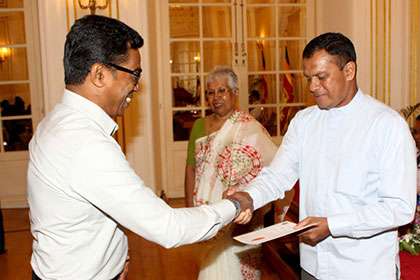


 The BIDTI had the privilege of associating with the Ministry of Foreign Affairs to organize the training programme on ‘Effective Leadership and Negotiation in Multilateral Diplomacy’ in collaboration with the United Nations Institute for Training and Research (UNITAR). The four day programme was held at the Ministry of Foreign Affairs from the 27th to the 30th November 2019.


 The four day programme was attended by the mid and junior level officers of the Sri Lanka Foreign Service, along with representatives invited from line Ministries. The especially designed programme consisting of two components, was aimed at strengthening skills and knowledge in negotiation and effective leadership. Negotiation Skills Expert and Director of the Multilateral Diplomacy Division Rabih El Haddad, and Senior Consultant and Leadership Skills Expert Jerome l’Host, assigned by UNITAR conducted the sessions.


 The Minister of Foreign Affairs and Chairman of the Board Management of the BIDTI, Tilak Marapana and the Secretary of the Ministry of Foreign Affairs Ambassador Ravinatha Aryasinhe joined the Prime Minister in the ceremony held at the BMICH. Alongside a distinguished gathering comprised of diplomatic corps, members of International organisations and visiting lecturers. Some of which have contributed to imparting their invaluable knowledge and experience to the students during their course of study.


